Hi,
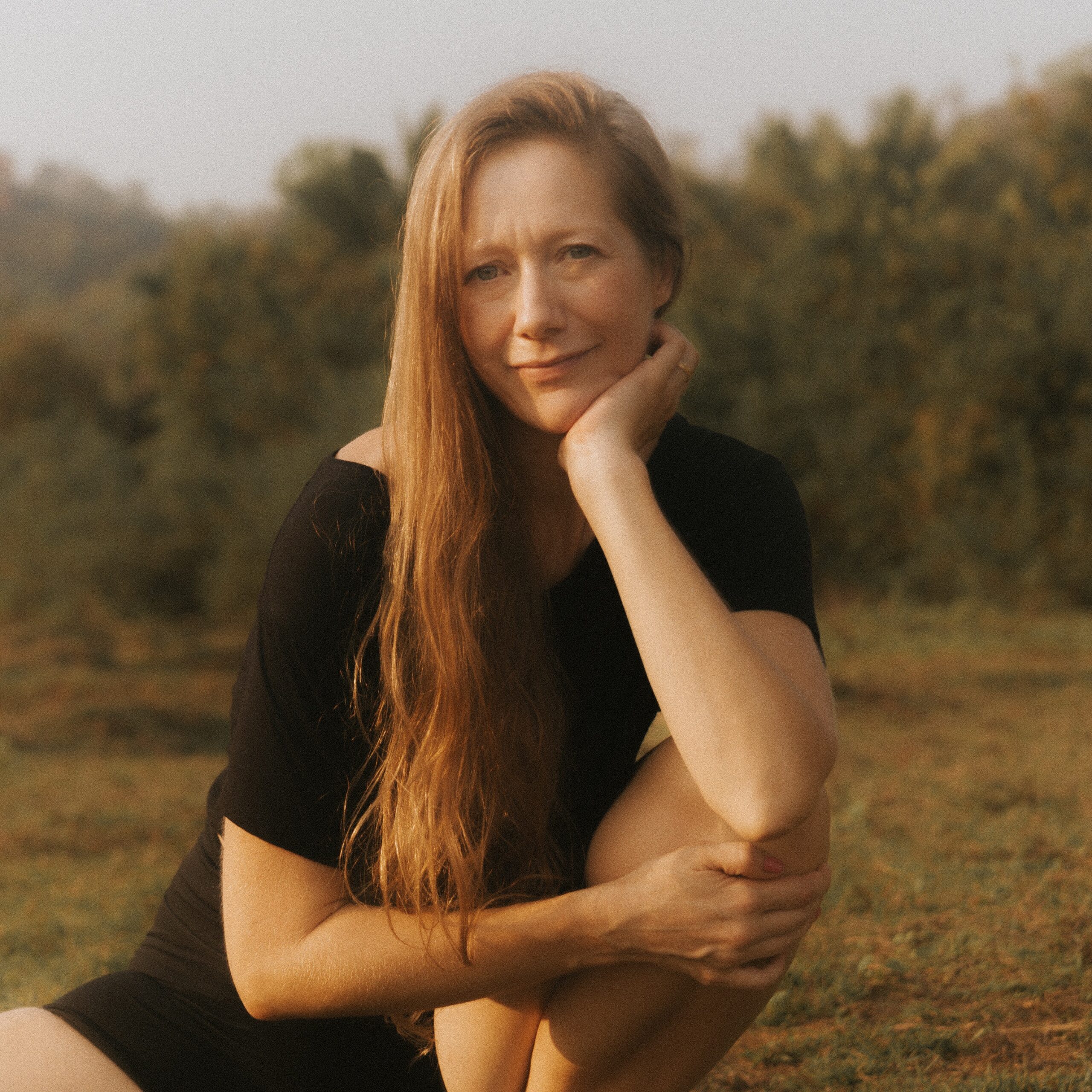
I’m Josefine – creator of Movementality
Researcher, movement educator, and lifelong seeker helping people to get bodies that are strong, capable, pain-free, and fun to live in.
Hi,
I’m Josefine – creator of Movementality
Researcher, movement educator, and lifelong seeker helping people to get bodies that are strong, capable, pain-free, and fun to live in.
Hi,
I’m Josefine – creator of Movementality
Researcher, movement educator, and lifelong seeker helping people to get bodies that are strong, capable, pain-free, and fun to live in.
I’m a former academic turned yoga teacher, turned movement educator. Today, I help people develop a more nurturing relationship with their bodies through personalised movement programmes and the Movementality method.
Movement has always been central to my life. I started dancing when I was ten, later immersed myself in strength training, and eventually developed my own approach to understanding pain, tension, and movement.
My original life plan was to become a dancer. When that didn’t work out, I turned to what felt like the “next best option”: an academic career. Deep down, there was always a longing to express myself through movement, a longing that had to be pushed aside to make space for intellectual achievements.
I focused very hard on becoming someone. Importance, impact in the world. Big ideas, brilliant theories. I wanted to make the world a better place, and I thought that if I could only come up with the very best social theory people would listen. Change would follow.
Needless to say, it didn’t work that way. The realisation that that most university researchers weren’t there to create change but to build careers hit me hard. I was a true idealist and I felt let down by the university.
I still pursued my PhD, and to be honest, its one of the hardest things I’ve ever done. Not because of the workload, but because my heart wasn’t really in it. It was like, deep down, I always knew it wasn’t the right path for me, but I couldn’t see a way out of it so I just kept pushing.
I used exercise as a way to manage my anxiety. I ran for hours, several days a week. Only when my body was fully exhausted I could find relief from the mental pressure.
Looking back, I’ve come to believe that when we’re mentally exhausted, physical exhaustion can feel like relief. It temporarily shifts our attention away from the mind. That doesn’t make it a sustainable way to manage life.
During my academic years, I often felt pressure over my chest, that made it difficult to breathe. My blood pressure was elevated and my cycles completely out of sync. I was a wreck. But I was someone.
I originally started yoga to complement my dance training. Just to keep my body fit and flexible. And I loved how well it worked. I was the person who would leave the room before Savasana, the final relaxation. Because I really couldn’t see the point of just lying down, doing nothing active. Nothing that made me intensely aware of the present moment in the way hard training did.
I had this fear in me, that
if I allowed myself to rest, I would never get my energy back.
I was afraid that if I truly allowed myself to rest, I’d never get my energy back. As if some part of me already knew how exhausted I was. I genuinely believed that if I stopped now, I’d sleep for five years. So I kept going.
And maybe it did not have the mental capacity at that time to view this belief logically, it was more of a feeling, and one that I have formulated fully only afterwards.
And then one day I decided to try a yin yoga class. Honestly, I only went because I had a bit of a crush on the teacher. The class was unbearable. Horrible. Because of how the yoga studio was designed leaving the room was not an option so I had to endure. I had to just lay there. And relax. For an entire class. I went for run afterwards just to feel like I had accomplished something.
But maybe, thats when the first seed was planted. Maybe rest had a purpose after all.
I completed my PhD in 2015. When the celebrations were over, I felt… nothing. Completely hollow. Burned out. I was chronically fatigued and had pain and tension in my lower back, my shoulders, and my neck. It was like a tiredness beyond words, and I didn’t have any tools to help me recover. The only thing I knew was pushing harder so pushing harder is what I did. For some time.
Then yoga began to slowly take over and with it came new perspectives that changed how I related to movement, exercise, and life.
I turned away from academia to pursue my newfound dream of being a ”travelling yoga teacher”. I did my first training. I started teaching. I embraced not only the physical aspect of yoga – the asana training – but also the philosophical aspects. I began to experience the benefits of meditation. I spent hours and hours sitting with my emotions. Letting the tears fall freely. Revisiting moments of grief, pressure, and self-abandonment.
Slowly, I new version of me began to emerge. A version that felt more true, more resilient, more grounded.
I found trust in uncertainty. Trust that things will unfold precisely they way they are meant to, if I only gave them time and space. I could begin to feel safe also when I didn’t have everything figured out.
And trust me, at that time I had very few things figured out.
Today, I can’t fathom myself pushing through simply to meet standards set by others. What matters most to me now is my own well-being. I trust my intuition. I trust that my body and mind carry an inherent wisdom, and that if I’m willing to listen, they’ll guide me. And I’ve learnt to quiet my mind enough to hear that wisdom.
Looking back, I realise my ambition never really changed. I still want to make the world a better place. The difference is in my focus: from trying to change society through ideas to giving people the opportunity to become more connected to themselves and more aware.
Movementality Was Born
I’ve had recurring lower back pain since I was a teenager. During my academic career, the pain spread to my neck, shoulders, and upper back. Over the years, I consulted countless professionals: physiotherapists, chiropractors, massage therapists, and various alternative practitioners.
What puzzled me was that sometimes an exercise or treatment would work, other times the same exercise or treatment was useless. It was as if the pain couldn’t be explained by the body alone.
After a few years of teaching yoga, I felt it was about time I’d take action on my plans to leave Sweden and explore the world. I wanted to do a second teacher training somewhere else and my eyes fell on india. The birth place of yoga, and to be honest, the only far away country I could afford.
A different way of moving
I found a school and a training that looked good, the teacher was not indian but international, and her approach resonated with me immediately. She was non-dogmatic, intelligent, and more interested in internal experience than in the aesthetics of yoga. The way conscious movement can heal and reveal.
I had the opportunity to participate in a workshop with the teacher before signing up for the month long intensive training and so I did. And thats how I first met Julie Martin.
The workshop was good. It was also different from everything I had done before. Julie encouraged us to let go of alignment and to explore movement through sensations. I remember being in a cobra position (on the belly with chest and upper body lifted to extend the back) and she came over to tell me to let go of the grip around my shoulder blades. I explained that I needed to keep my shoulder blades in place because otherwise my shoulder would feel unstable and painful. She listened and maintained that I try to let go if the grip and see what happens. So I did. I explored, I moved freely, expecting to be in pain after the workshop. I wasn’t. What happened instead was a new sense of joy in my body.
It was as if the very cells of my body felt happy.
Its still the best way I know to describe it.
I did the teacher training with Julie in Goa, India, and she became one of my most valued teachers.
What she taught me was to be fully present with what was happening in my body, in real time. And to trust that information. It was also during that training that I voluntarily opted for rest instead of effort for the first time in my life. We were always invited to rest and observe the teaching instead of participating, should we feel like it. For me that never seemed like an option because I could always push myself though physical effort and usually emerge on the other side invigorated and feeling good about myself. Then, on one occasion, I was feeling extremely tired and so I crawled over to the wall and sat to watch. And nothing bad happened. I didn’t fail. I didn’t feel less.
I realised that I was a valuable person beyond my accomplishments. My value was not tied to performance.
Working with pain
After that second teacher training I began to work more specifically with back pain. I did workshops, I incorporated the back pain perspective in my classes. I would take on private students and work with their back pain.
I spent years learning more, both through reading and through trainings and workshops.
For a long time, I tried to move my way out of pain, and movement is essential, but it wasn’t enough on its own. Real change happened only when I understood that my pain was not caused by structural damage (back pain rarely is) but that it was a function of everything going on in my life.
The birth of movementality
Gradually I developed a way of sensing from within how I should move to help my muscles either release, or engage.
Over time I came to realise that I hadn’t developed a collection of exercises, but a coherent way to work with the body that would not only help with pain and tension but with body awareness, and ultimately, with self awareness.
Back pain is incredibly complex, and I know for sure that there is no simple answers to it. There is, however, one principles that keep returning, that always holds true: be better we understand ourselves, and our pain, the better we become at managing it, and ourselves.
Movementality is built on micro movements, focused attention, and what I call, for lack of better term, somatically intelligent movements. That is movements that follow the natural lines and patterns of the body, rather than imposing movements upon it.
The aim is never to fix the body, but to support its inherent alignment and intelligence. rather than forcing, movementality invites you to listen, and to learn. When movements are small enough, the nervous system perceive them as safe, and the body can begin to let go of tension. It opens up a space for change, and it invites you in. It takes courage, becasue were naturally hesitant to going towards the pain. But pain is not the enemy, its a teacher. When we stay present with sensation, instead of trying to correct it, the nervous system begins to recalibrate. Tissues soften and old, protective patterns start to unwind.
At its core, movementality is a conversation with the body.
Its born from lived experience, and from numerous hours of studying human bodies and nervous systems.
I still experience back pain from time to time, the difference is that now I know where to turn when it happens. Not to a clinic, not to another practitioner, but inward, to the relationshop I’ve built with my own body. That’s where my healing begins.
My work is an invitation – to begin to explore yourself on a deeper level. So that you can rediscover your body’s inherent intelligence and capacity for healing.