
Become friends with your body
Personal 1:1 somatic intelligence sessions for a body that feels safe, capable, pain‑free, and supportive of your life.
These sessions are for anyone who wants to stop fighting their body—and start working with it.
We build a body that functions well in real life: strong, mobile, calm, responsive, and resilient.
This is not generic personal training. This is neuro‑informed, somatic, intelligence‑based movement — designed around your nervous system, pain patterns, emotions, and daily demands.
Who these sessions are for
You don’t need to be injured, broken, or spiritual to benefit from somatic intelligence work. These sessions are for anyone who wants a better relationship with their body.
-
You live with recurring pain (especially back, neck, hips, or stress‑related pain)
-
You feel disconnected from your body or don’t trust it
-
You want strength and mobility without forcing or overtraining
-
You want to move in ways that actually support healing
-
You’re tired of quick fixes and want real, embodied understanding
-
You want tools you can use for the rest of your life
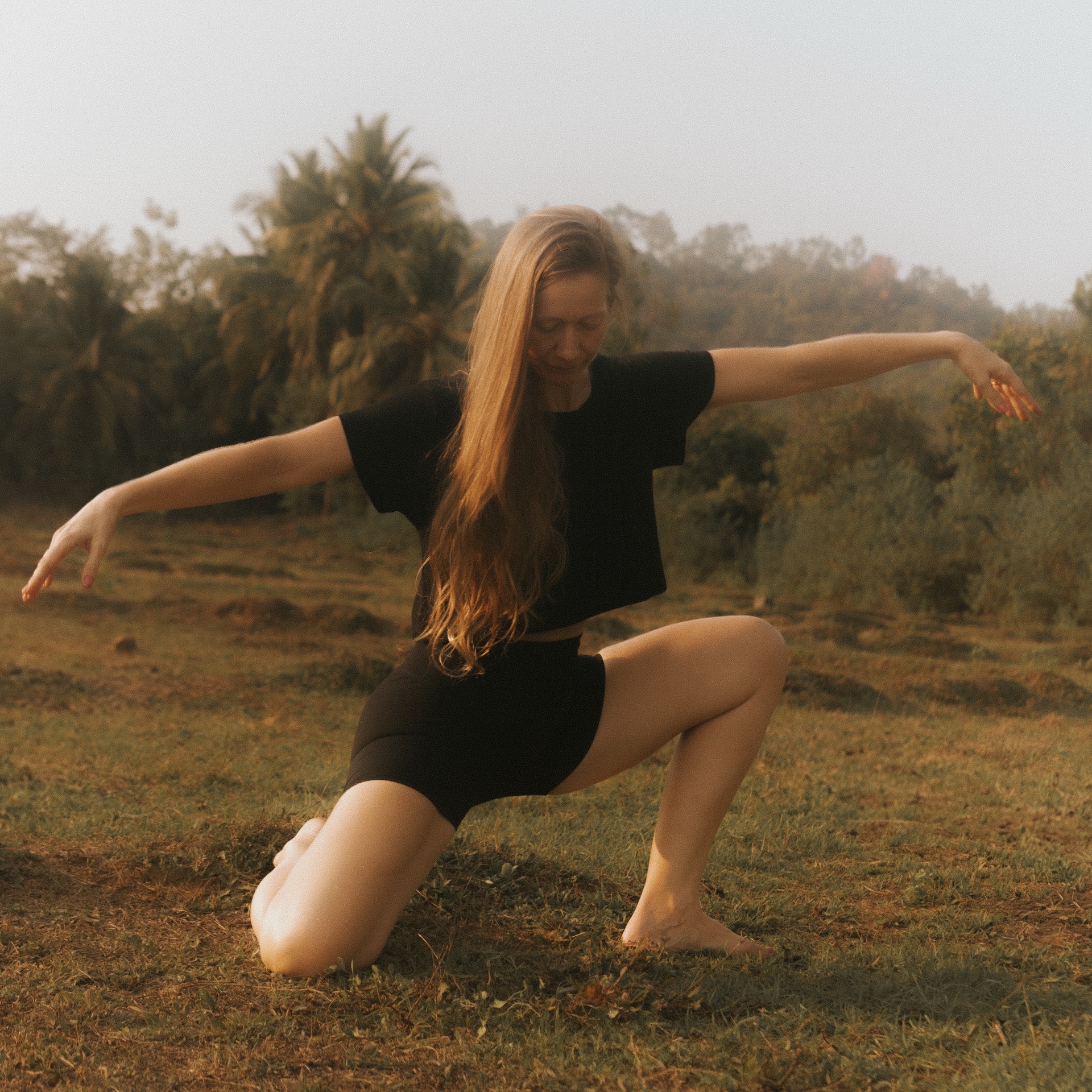
What I Mean by Somatic Intelligence
Somatic intelligence is the ability to sense, interpret, and respond to your body’s signals—before pain, tension, or exhaustion take over.
When somatic intelligence is high:
-
Movement feels intuitive instead of forced
-
Pain becomes information, not an enemy
-
The nervous system can shift out of constant protection
-
Strength, mobility, and relaxation coexist
In these sessions, we don’t override the body.
We train the relationship between brain, nervous system, emotions, and movement.
How the 1:1 Sessions Work
Step 1 – Assessment & Listening
We start with your history, pain patterns, stress load, goals, and daily life. Your body’s story matters.
Step 2 – Neuro‑Informed Movement
Sessions may include micro‑movements, slow somatic work, strength training, mobility, or functional movement—always adapted to your nervous system.
Step 3 – Pain Relief & Capacity Building
We work with pain directly (often gently and subtly) while also building strength, confidence, and trust in your body.
Step 4 – Integration Into Life
You learn how to apply what we do to sitting, walking, training, working, resting, and stressful situations.
What We May Work With (Always Individualised)
Recurring back pain
Back pain is rarely just a mechanical problem—and it’s rarely solved by forcing strength or stretching harder.
In our work, back pain is approached as a communication pattern between movement habits, load, emotions, and the nervous system.
We explore how your body protects itself, where effort is excessive, and how safety and support can be restored through intelligent movement. This often includes subtle somatic work alongside strength, mobility, and coordination—so the back no longer has to compensate for the rest of the system.
The goal is not just relief, but confidence: knowing how to move, train, sit, work, and live without constantly managing your back.
Stress related tension and nervous system overload
Chronic tension does not mean that your muscles are too short. It is a sign that your nervous system is holding a muscluar grip to protect your body.
In these sessions, we work with the body’s stress responses directly, using movement, attention, and gentle techniques to communicate safetly to your nervous system.
You learn how tension forms, how it’s maintained, and how to interrupt the cycle in real time—during work, training, emotional situations, or everyday life.
As the nervous system becomes more flexible, the body naturally releases unnecessary holding, movement becomes easier, and energy returns without forcing rest or collapse.
Emotional attentiveness
Emotions are not something to regulate away—they are signals the body uses to guide protection, connection, and change.
In this work, we cultivate emotional attentiveness: the ability to sense emotional shifts in the body without becoming overwhelmed or disconnected.
Through slow, intentional movement and awareness, you learn how emotions show up somatically, how to stay present with them, and how to allow release or integration when the body is ready.
This builds trust—both in your emotional experience and in your body’s capacity to process it—without analysis, suppression, or forcing catharsis.
Somatically supportive strength training
Strength is not just about muscles—it’s about how safely and efficiently force can move through your body.
Somatically supportive strength training focuses on building strength without overriding sensation, breath, or coordination. We train load tolerance while staying connected to internal feedback, so strength supports the nervous system instead of threatening it.
This approach often reduces pain, improves confidence, and creates a sense of stability that carries over into daily life—lifting, training, working, and moving with less effort and more clarity.
Mobility and functionality
Mobility is not flexibility for its own sake—it’s the ability to move where and how you need to, when life asks for it.
We work with joint health, range of motion, coordination, and functional patterns that support your actual daily demands, not idealised shapes.
As somatic intelligence increases, mobility improves naturally: movement becomes smoother, more adaptable, and effortless —supporting a body that can do what you want it to do, without hesitation or fear.
Breath and relaxation techniques
Breath and relaxation are skills you can use—intentionally and flexibly—throughout your day.
In these sessions, you learn a small, adaptable toolbox of guided relaxation and breathing exercises that can be applied in real situations: before sleep, during work, between meetings, in training, or when energy drops or tension rises.
We explore how different breathing patterns and attention strategies can support both calming and energising states, depending on what your body needs in the moment.
Rather than relying on a single technique, you develop discernment—knowing which tool to use, when, and why—so breath and relaxation become practical supports for everyday wellbeing, focus, and resilience.
Posture, movement coordination and body trust
Posture is not something to hold—it’s something that emerges when the body feels organised and supported.
We work with how different parts of your body coordinate during movement, rest, and effort, so posture becomes dynamic rather than rigid.
As coordination improves, trust follows: you start to rely on your body instead of monitoring or correcting it.
This builds a sense of internal support—moving, training, and living with less self-surveillance and more confidence in your body’s ability to respond appropriately.
Not just personal training - not just therapy
These sessions sit at the intersection of:
- Personal training
- Somatic therapy
- Pain science
- Nervous system regulation
We don’t chase performance at the cost of health.
We don’t rest endlessly without building capacity.
Instead, we develop a body that can handle life—physically, emotionally, and neurologically.
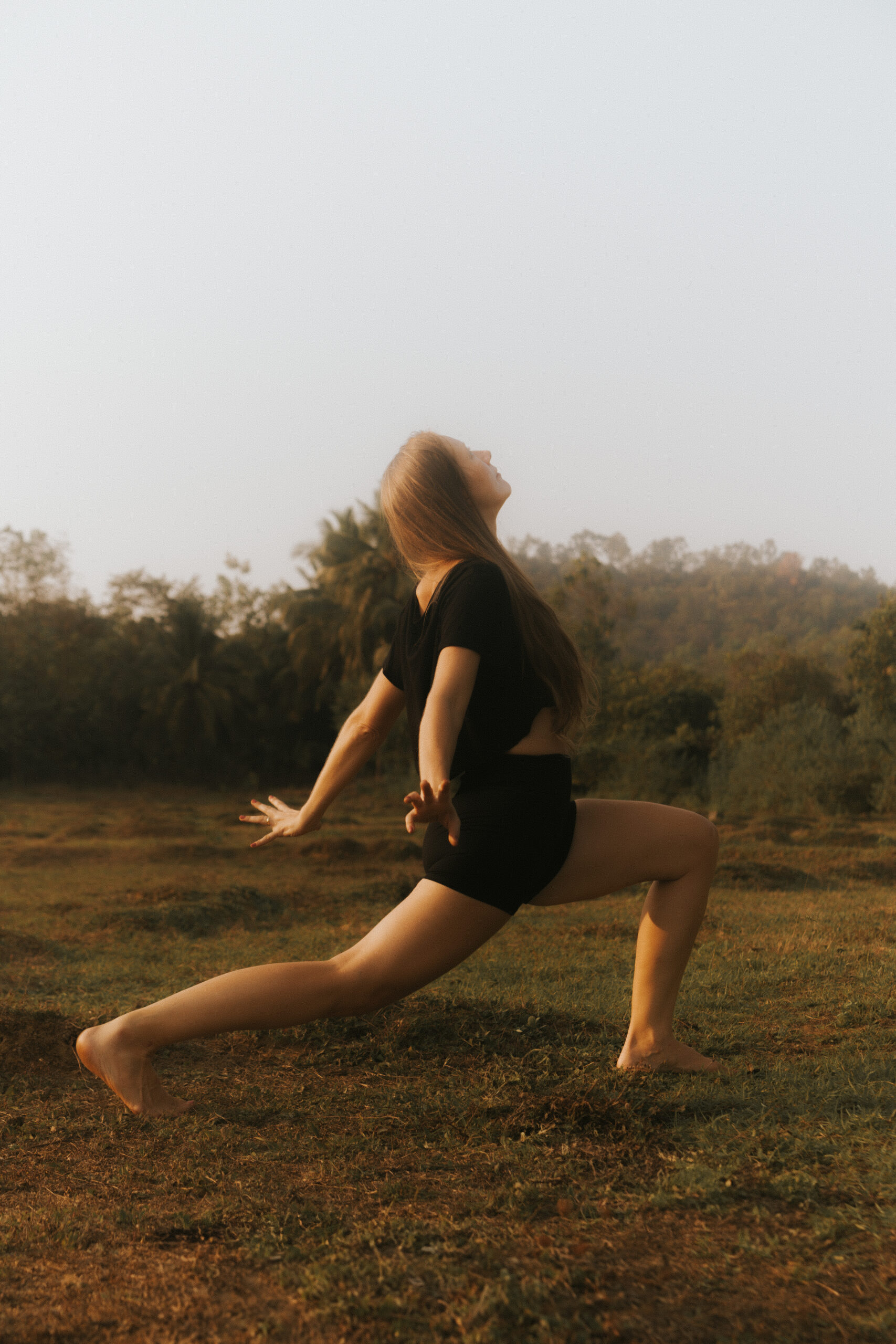
How we can work together
Single 1:1 session
One personalised somatic intelligence session for assessment, clarity, pain relief, or guidance around a specific issue.
-
60-minute 1:1 session
-
Individual movement guidance
-
Suitable as a standalone or first step
Primary offer
12 week program
A deep, personalised journey into body intelligence, pain relief, strength, and long-term capacity.
-
Personalised 1:1 sessions over 12 weeks
-
Individualised instruction video
-
Ongoing email support
-
Integrated strength, mobility & somatic work

Your guide
I’m Josefine, founder of Movementality.
I combine research‑level thinking with lived experience, somatic movement, yoga, personal training, and pain science.
My work is shaped by years of studying how bodies heal when they feel safe, listened to, and intelligently trained—not pushed or ignored.
I don’t give you a system to follow.
I help you build your own somatic intelligence.
What other have to say
I loved Josefines excellent style and genuine informed way of teaching my body ways to move, healing old injuries and also enhancing my own practice. I wish I had more time with her!
For a long time I have found it difficult to get started with training, as I have suffered from chronic foot injuries throughout my adult life. Josefine was not only understanding and careful to take into account my very specific needs, but also managed to put together tailored programs that really worked despite my limitations. It felt incredibly satisfying to find training forms that worked for me! The contact with her has also been very kind and encouraging throughout, and completely free from the rush that can otherwise create more obstacles than help me.
I realised that I’m using my back muscles where I should use my glutes. What a realisation, no wonder my back has been so tired!