
If you’re like most people you have sometimes, or often, suffered from back pain. Either lower back pain or any kind of pain or prolonged tension in the neck, shoulder, or upper back. If you have sought professional help for it, Im sure you have been introduced to the concept of the neutral spine. Like som sort of atlantis for back pain; a hidden place, perfect. Harmonious. Lost, but definitely real, and if only you could find it, everything would change… Or would it? Im here to offer new perspectives and a deeper understanding of the spine and its presumed neutrality.
Possible conflict of interest : The author of this text has a personal vendetta against chairs. She considers herself a ”free” person, unbound by traditional views on how to behave in spaces where most people sit on chairs.
First things first, what is a neutral spine and why is it a good thing?
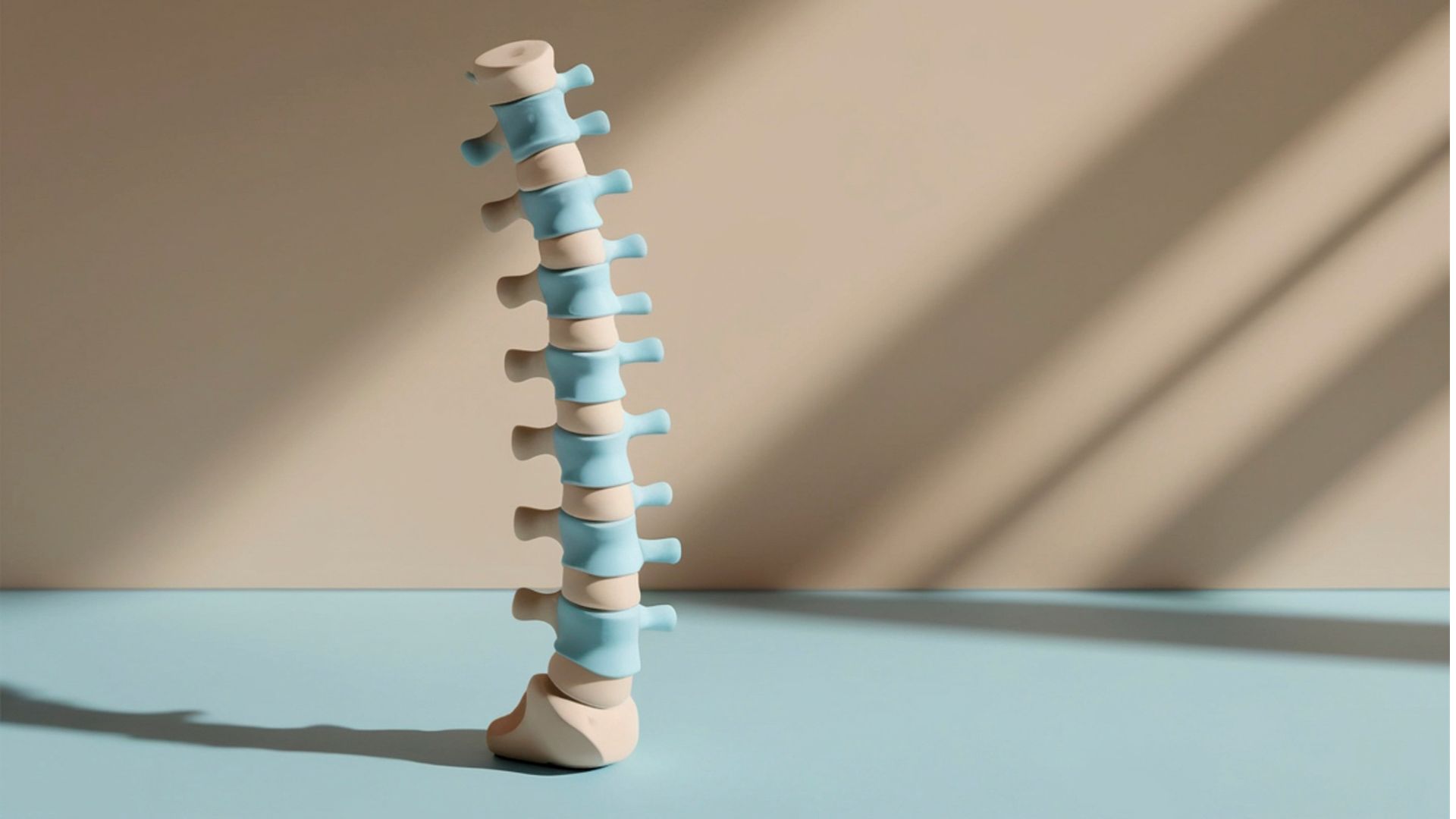
Spines are not straight but s-shaped, and the spine will be in a neutral position when its curves are maintained. How much and how little, however, is individual. We all look different, on the outside and on the inside. However, a neutral spine is obtained from a neutral positioning of the pelvis, that is, not tilted either backward or forward.
I’ll share a really good exercise that helps you find your neutral spine. Later.
When is it good to maintain a neutral spine? Well. It isn’t good to maintain anything when it comes to the spine, because the spine is designed to move. A moving spine is a healthy spine. A sedentary spine can lead to physical pain. Can, often. But not always. It is, however, really valuable to be able to find your neutral spine, because it provides a neural blueprint for where you are in your body. It’s like a reference point that you can return to and move away from. Basically, it’s a somatic intelligence thing.
It is often said that maintaining a neutral spine allows the muscles, tendons and ligaments to work together in harmony. It is said to reduce stress on discs and ligaments and lower the strain on the postural muscles, and to help with distribution of load, if your were to carry something heavy, like your head (if it also helps in carrying the weights of all your troubles is something we bone out later on). And, well, yes, but the question is: what on earth are you doing to your spine to put so much pressure on it? Are you at the gym doing deadlifts? No, you’re probably at your office and please don’t think that leaning over to one side and resting your elbow on the arm rest will cause severe pressure on your spine.
So, standing, or sitting, with the spine in a neutral position is great. That is, if you are forced to stand or sit still for prolonged periods of time. If someone told me (I’ll get a million dollars) to stand absolutely still for five hours, I would absolutely get into a position of a neutral spine, because it would undeniably be easier than, say, bending my spine to one side. Fortunately, most of us are never granted such horrendous tasks. Interestingly, many of us voluntarily accepts to remain in the same seated position for many, many hours every day. So yes, aiming ot maintain a neutral spine seems to make a lot of sense.
But really, why should you sit for that long when you would be so much better breaking the sitting sessions into smaller chunks? It is entirely possible to take care of your body all while doing important brain work.
Like I said, spines are designed to move. So move it. Best option: regularly take short breaks, change position often, alternate between standing and sitting, and engage in somatically informed movement on a daily basis. Second best option: remain seated to hours but do it in a chair that keeps your spine in a neutral position.
So why are we still in chairs?
And this leads us to the problem I have with desk chairs.
They don’t allow for movement. They lock you in a position which is sort of beneficial, but they don’t allow you to change that position. Have you ever tried to sit cross legged on a desk chair? Or kneeling? Or placing one leg underneath you? Its not really possible because these chairs are designed to support only one position. Desk chairs promise you atlantis, but like atlantis is not a real place that you can arrive at, the neutral spine is not a position you find and hold. Muscles will still work to keep yo upright, although they don’t have to work as hard. What they actually do is not to insure your posture is suddenly “correct”, but that your system feels more supported and therefore less on guard. The chair reduces effort, and with it, the quiet background tension of trying to hold yourself “right”.
It gives your nervous system a sense of safety; you’re okay, nothing is being damaged. And when that sense of safety increases, the need for constant bracing decreases. This is important for the sensation of back pain, as it is often related to stress and mental tension on the level of the nervous system. So, in a way, it is possible to argue that advanced desk chairs do help carrying the weight of all your troubles, more so than the weight of your head.
But the real solution isn’t to stay in the chair, it’s to develop that same ability to let go of tension, adjust, and reorganise from within, in any position.
I like to compare the idea of a perfect, neutral, position of the spine to the idea of homeostasis as a state of perfect balance. Homeostasis is not a fixed perfect state, it is the body continuously regulating within ranges. It is like a dynamic equilibrium, keeping us as balanced as possible given all the stimuli we are subjected to all the time. And just like the body doesn’t maintain a perfect balanced state – there’s no need for it – the spine doesn’t maintain a perfect neutral position, it maintains the ability to constantly reorganise. And that reorganisation is being obstructed in a desk chair.
0 Comments